
Security in Smart Cities: How Technology Keeps You Safe

In 2014, researchers at the University of Michigan demonstrated they could hijack 100 traffic lights using ordinary laptops. They exploited unsecured wireless networks and default passwords in a system deployed across 40 U.S. states.
The incident revealed something most urban residents never consider. The infrastructure managing daily commutes, emergency services, and utilities operates on networks can be compromised. As cities worldwide race to implement smart technologies, they’re discovering that innovation and vulnerability often arrive as a package deal.
Smart cities are not some theoretical concept; many of our cities of today are considered smart cities. The same technologies that make smart cities possible can also cause a cascade of risks. But cybersecurity professionals are working to ensure that you are safe as possible. You may need to take additional steps to protect yourself, whether you are a visitor or a resident of one of these cities.
What are smart cities?
A smart city is any city that uses interconnected sensors, devices, and data analytics to improve urban services and quality of life. These cities deploy Internet of Things (IoT) technology across multiple domains, including things like:
- traffic management systems that adjust signal timing based on real-time congestion
- smart grids that optimize electricity distribution
- waste management sensors that alert collectors when bins reach capacity
- environmental monitors that track air quality and noise levels
There is no single technology required for a city to be a smart city. But most of these metropolitan areas use similar digital solutions for running their municipalities more effectively.
The world’s leading smart cities demonstrate different approaches to this integration.
Zurich, Switzerland. Zurich has topped global rankings for five consecutive years. They’ve implemented everything from adaptive streetlights that adjust brightness based on pedestrian traffic to building management systems that coordinate heating, cooling, and electricity across city properties.
Singapore. Singapore has embedded smart technology throughout its infrastructure, from autonomous vehicles on public roads to a nationwide sensor network that monitors everything from crowd density to mosquito breeding grounds.
Oslo, Norway. Oslo has committed to converting all city vehicles to electric power by 2025 while using traffic monitoring to reduce congestion.
Meanwhile, in the United States, cities like Boston and Atlanta are expanding their smart infrastructure. Boston hosts 384 AI companies per 100,000 residents and invests heavily in digital accessibility initiatives.
What these cities share is a fundamental reliance on data. Smart cities generate enormous volumes of information, which flows continuously from distributed sensors to centralized platforms, where it is processed by algorithms. These algorithms, in turn, trigger automated responses and workflows.
Smart cities are dependent upon a data-based feedback loop, which cycles through the process of collecting data, identifying patterns, optimizing performance, and then repeating it all over again.
What is the main security vulnerability that plagues smart cities?
Every sensor, camera, and connected device in a smart city represents a potential entry point for attackers.
The scale of this vulnerability becomes clear when considering that cities now manage billions of connected devices globally. Unlike traditional IT systems, where security teams can monitor a defined network perimeter, smart city infrastructure sprawls across an entire urban area with countless access points and diverse technologies (some more sophisticated than others).
The risks aren’t theoretical, either. In 2019, security researchers discovered a data leak affecting surveillance systems across Chinese smart cities. It exposed real-time feeds and facial recognition data. In Israel, hackers exploited a commercial irrigation system through a man-in-the-middle attack. They gained the ability to remotely control water flows that could drain reservoirs. While that particular incident involved agricultural infrastructure, similar vulnerabilities exist in urban water systems, wastewater treatment facilities, and flood management infrastructure.
According to a survey of 76 cybersecurity experts, the most vulnerable and impactful smart city technologies are emergency alert systems, street video surveillance, and smart traffic signals. Any hacker or cybercriminal who manages to access these systems can cause serious disruptions for a municipality.
The interviewed experts assessed not just the technical weaknesses of these systems but also how attractive they are to different types of cyber attackers.
Nation-states were ranked the most effective potential attacker. In an international cyberattack, the perpetrators would be most interested in:
- Emergency or security alerts
- Street video surveillance
- Smart traffic lights/signals
You’ll notice that these are the same three technologies ranked as most vulnerable and highest impact. Other potential attackers include insider threats, terrorist organizations, cyber criminals, and thrill-seekers looking for attention.

How to Protect Smart Cities From Distributed Attacks
Smart cities face a unique challenge. Instead of protecting one central computer system, they must secure thousands of devices spread across the entire city while keeping everything connected and working.
There are a number of strategies used by proactive cities to keep their systems secure.
Better Encryption for Small Devices
Companies like NEC have created special encryption designed for devices with limited memory and processing power. That way, municipalities can protect their data without draining resources. New authentication methods also verify devices without constantly checking with central servers. This is especially important when you’re managing thousands of sensors citywide.
Smarter Network Design
Secure smart cities don’t need to connect every device directly to the internet. Instead, they should group devices by function and limit communication between groups. If a hacker breaks into a parking sensor, they can’t automatically access traffic lights or emergency systems. Processing data locally (called “edge computing“) also reduces risk by limiting how much information travels across networks.
AI-Powered Threat Detection
Machine learning watches for suspicious patterns across millions of data points—unusual logins, strange data flows, or devices acting oddly. These systems spot potential attacks much faster than humans could.
Ongoing Maintenance
Cities must track all connected devices, watch for security weaknesses, install updates, and eventually replace old equipment. Many cities struggle here, especially with devices installed years ago by different contractors that lack proper documentation.
What about privacy in smart cities?
Smart cities have to do more than protect their own assets; they also have to protect their citizens’ privacy. Privacy-savvy citizens likely have questions about how their data is protected when everything in their city is so interconnected.
For example, censors that improve traffic are also, by default, tracking where people go. Surveillance cameras that increase an area’s safety also create a heavily monitored populace. Cities must figure out how to balance physical safety, urban efficiency, and personal privacy.
In fact, concerns about privacy are the biggest reason why people push back against smart cities. For example, when Google’s Sidewalk Labs wanted to develop Toronto’s waterfront into a smart district, privacy advocates called it a surveillance state. Citizens wanted to know what data would be collected, who would own it, how it would be protected, and what could happen if hackers accessed it. The project failed because there wasn’t enough transparency about data practices or trust with residents.
The technical challenge that cities face is collecting the data they need while protecting everyone’s privacy. That’s why you’ll hear language like “privacy-by-design” in conversations about smart cities.
Privacy-by-design means building protections into systems from the start, not adding them later. This could mean anonymizing data before it’s sent anywhere, collecting group data instead of individual information, or automatically deleting identifying details after finding useful patterns. Some cities process video feeds locally to count pedestrians or detect traffic violations without transmitting or storing actual images.
New regulations are setting limits, too. The EU’s GDPR restricts facial recognition in public spaces and limits how long data can be kept. But rules vary widely by location, and enforcement is inconsistent. Many cities are creating their own policies, establishing data oversight boards, and consulting privacy advocates to build public trust.
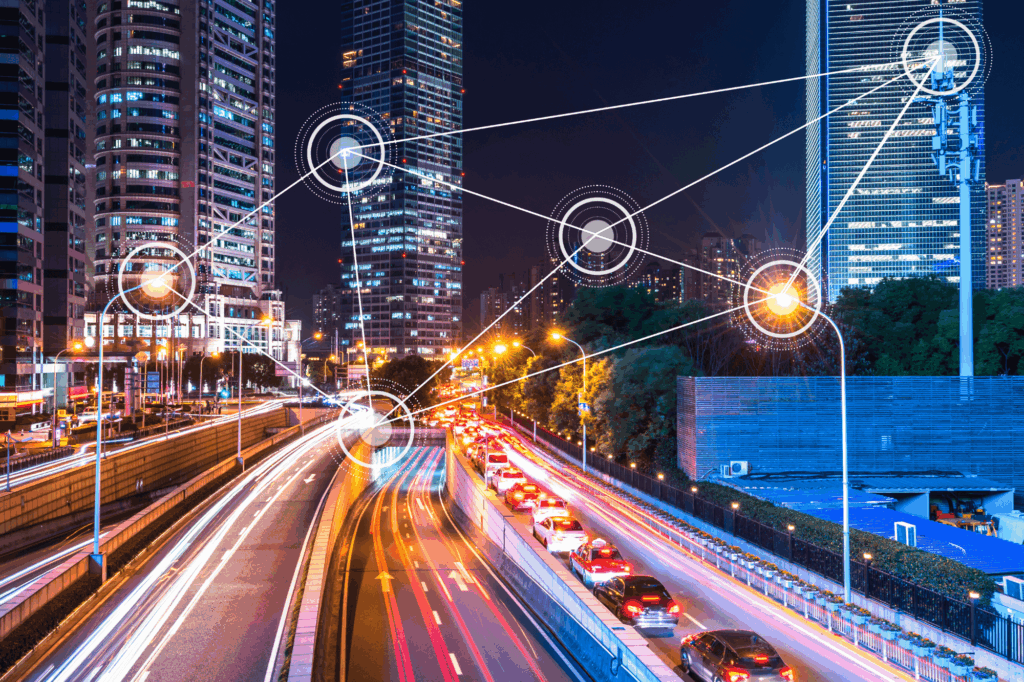
The Goal: Building Secure Smart Cities from the Ground Up
The path forward requires balancing innovation with security from the planning stage. Cities are learning that retrofitting security into deployed systems proves far more difficult and expensive than building it in from the start. This means including security requirements in procurement contracts, mandating secure development practices from vendors, and budgeting for ongoing security operations rather than treating them as optional add-ons.
It’s important to keep the following things in mind:
- Collaboration between public and private sectors is proving essential.
- As smart city technology evolves, so do the threats.
- A major question is whether cities can implement smart technologies securely enough that citizens trust them and reliably enough that they enhance rather than endanger urban life.
Smart cities represent an experiment in using technology to address urban challenges. But that experiment only succeeds if security and privacy receive the attention they demand from the beginning rather than being addressed after incidents occur. The cities getting this right are those treating security not as a technical problem to solve once, but as an ongoing practice requiring investment, expertise, and constant vigilance as both technology and threats continue to evolve.