
Keeping Your Data Private on Today’s Internet
These days, scammers and criminals don’t have to send vague or general attacks and hope they catch you. They know who you are. They know your name, your address, your family, and lots of personal details. This can make their ploys and threats sound convincingly, frighteningly real. Safety online (and increasingly in the physical world) starts with keeping your data private. Taking back control of your personal information has never been more critical.
See New Rules of Privacy with Arjun Bhatnagar for a complete transcript of the Easy Prey podcast episode.
Arjun Bhatnagar is the co-founder and CEO of Cloaked, a security and privacy company that works to help consumers take control of their personal information and reshaping how companies and industries think about, use, and access data. Cloaked wants to put people in control of their own data and identity and fight for people to have more control when companies and AI programs try to collect as much about you as they can. Arjun himself has been a technologist for over twenty years.
Arjun first became interested in privacy when he first got access to Facebook in 2005. Signing up asked for his full name, email address, and phone number. He immediately wondered what would happen in Facebook became a big company and more people could access his profile and see this information. So he signed up with a fake name. It was the start of a journey where other people thought he was crazy and paranoid, but he was slowly becoming privacy-aware. Working as a CTO at an engineering organization gave him a deeper understanding of how bad the privacy problem could be and stoked his passion for keeping online data private.
The Market for Personal Data
Collecting, using, and selling consumers’ personal information is a massive market. It’s over three billion dollars per year. And it’s not just data brokers doing it. The phrase “data broker” sounds ominous – of course those are the bad guys collecting and selling your data for profit. But every online company that can collect your info is involved in this. Everyone is trying to profile you, collect your info, aggregate it with other info, and sell it to others. And even if they’re not actively selling your data, anything they collect could get hacked or breached.
Everybody is trying in an effort to profile you, aggregate information about you, sell your information to others.
Arjun Bhatnagar
That can be something as seemingly innocuous as your parking app. Arjun still remembers in 2022 getting an email from the app he used to pay for parking in his area letting him know they’d had a breach. The email reassured him that his credit card info and password were safe. The thieves got his name, address, car’s make and model, license plate, and location history. Criminals now had access to everywhere his car had been parked, but they wanted him to believe it was okay because they didn’t get his credit card information.
Arjun thinks about privacy a little different from other people. “Privacy” is an overloaded word. It tries to include a lot of things. Because of that, many people – including in tech – think it’s about being hidden or anonymous. But it’s not. Keeping your data private is about being in control of your data and being able to choose who knows what about you and your family.
Privacy has been designed to be an overloaded word, where it tries to catch all and do everything.
Arjun Bhatnagar
We Have All Always Been Targets
For a while, there was the idea that the only people who really needed to worry about privacy were high-profile people. Celebrities, athletes, politicians, and Fortune 500 CEOs were criminals’ targets. If you weren’t a public figure, you didn’t need to worry about keeping your data private. But that has never been the case. Companies have always been collecting, aggregating, and selling your data as much as you could. But the difference now is how it’s done – and how much easier it’s gotten.
In the past, most hackers were someone who went to work, got on their computer, and worked their 9-to-5 job, but their job was to attack or compromise you. It was a job, so there were waves and seasons when attacks happened more or less often. But recent advancements in AI have significantly lowered to cost to do efficient, wide-scale attacks. It makes attacks both better and cheaper. At this point, it’s not a matter of if you’ll be compromised, it’s a matter of when.
Now it’s not a matter of if you’re going to be compromised, it’s a matter of when.
Arjun Bhatnagar
It’s not just speed and efficiency, either. AI makes it easier for attackers to integrate all of that data collected about potential targets. It doesn’t take a lot of human effort to create these “contextual attacks” that integrate your personal information. An AI can aggregate the information, craft a message, and send it out with little human effort. And you as the target get a personal, targeted message that seems very real. So it’s important to figure out how to make yourself safer where you can.
How Your Information Gets Out
So much of your information is available for sale. And it’s not very expensive. Just pennies on the dollar could get anyone interested all the information on you that they might want. And not just your details, accounts, passwords, and credit cards, but information about your family, too.
It’s pennies on the dollar to get everything about you, your family, your accounts, your passwords, your credit cards.
Arjun Bhatnagar
The scary thing is that it might not even be the thing you think that’s putting your information out there. It could be something you revealed on social media. But it could be because you’re giving out your phone number that you’ve had for years, and it’s leaking everything about you. If you give the same information over and over, it makes it easier for attackers to identify which information belongs to you.
It’s always easier to say no to sharing information and then change your mind later than it is to give out your info and then try to claw it back later. The good news is that people are becoming wise to this. Ten years ago, people were happy to give up their information because they want a cool app or feature. But today people are disabling smart TV features, unplugging their Alexas, and skipping apps that harvest their data. Even people who aren’t privacy experts are starting to feel like something is wrong and want to keep their data private. Arjun thinks this general concern for privacy started with the Cambridge Analytica incident. But with the rise of AI, people have become even more aware of data collection – and they’re finding it creepy.
Removing Data Isn’t the (Only) Answer
When you think about keeping your data private, it often brings to mind the idea of removing your data from the internet. Cleaning up your data is important. But it is a lot of work. And just removing information isn’t a complete solution. The answer has to be more holistic. Over three-quarters of Americans feel like they don’t have control online. And more than two-thirds of Americans feel more violated by companies harvesting their info than by hackers stealing it. A fully 90% of Americans would like to make it illegal for companies to harvest their data.
People are feeling more violated from companies harvesting data than from a hacker stealing it.
Arjun Bhatnagar
There are really three parts to keeping your data private. First is that idea of cleaning it up. Change compromised credentials, stop reusing passwords, get your data away from data brokers, make an effort to clean up those existing problems. Next is defense. Take steps to protect yourself from scam, spam, or phishing messages that might reveal your data.
But the thing that makes the biggest difference by far for your long-term online privacy and safety is what’s called data poisoning. When people are harvesting your data, they’re harvesting everything. And because what you’re doing right now is more valuable than what you did three years ago, new data always replaces old data. You can put in junk or inaccurate data to “poison” the information people have about you.
How Data Poisoning Works
Data poisoning works because companies aren’t tracking you with truly unfalsifiable information like your social security number. That kind of sensitive data might be connected to your profile, but it’s not used to track you. Instead, companies use other data points that reveal who you are. Phone numbers are a big one. Most people have just one personal number and they keep it for decades. It’s an easy way to find you across every website, app, and account you use.
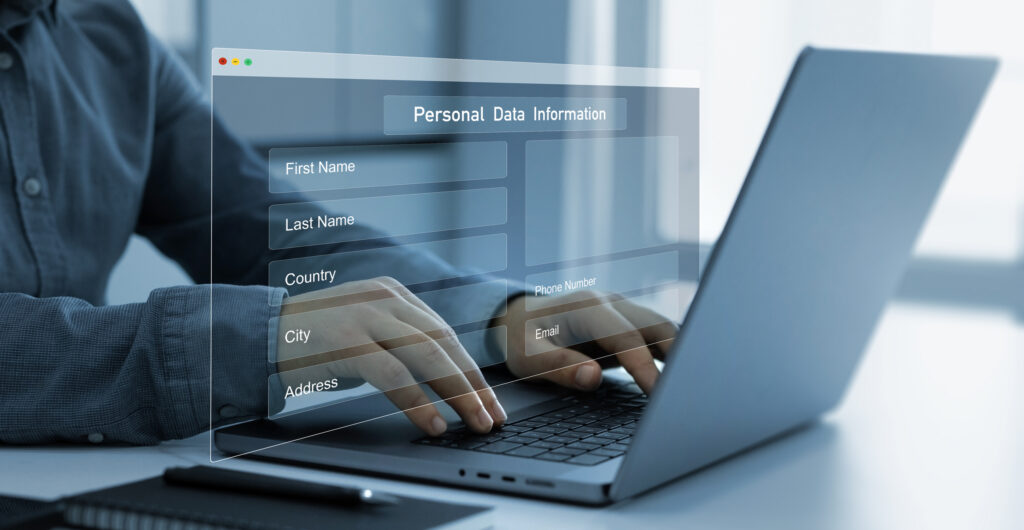
Data poisoning takes that knowledge and uses it to mess up the companies’ tracking plans. It’s one of Cloaked’s primary strategies for keeping your data private. They help you clean up your info and stop scams and phishing, but they also create fake emails, phone numbers, credit cards, passwords, and even IP addresses to hide your real information. You can have a and phone number for your Amazon account that’s different from the one on your Uber account and still different from the one you give the cute person at the bar. This lets you avoid giving out your real information anywhere.
Arjun has around 2,000 different phone numbers with Cloaked. Every single account he has lists a different phone number. That makes it much harder for companies to identify that all of his accounts belong to the same person. And it means that when someone looks him up, they can’t tell which information is real. Most people don’t need as many phone numbers as Arjun has. But just adding some confusion on what your real information is will keep you safer.
The Downsides of Data Poisoning
Some people assume that associating false information with your identity could cause problems. But an identity is a consensus. Something gets associated with you because a bunch of different people – government, banks, utility companies, social media, and more – agree that these things are associated with you. They can do this because they’re all getting and sharing your info to figure out who you are. That also means that just a little data poisoning will spread that poison everywhere quickly.
Your identity is not because the government says it’s your identity. It’s because a bunch of people say, “You know what? That’s Arjun.”
Arjun Bhatnagar
That doesn’t mean there are no potential downsides, though. If you’re trying to create aliases to disguise your phone number, email, address, and other information on your own, it can be challenging to keep it all straight. Services like Cloaked help by making sure every email, phone call, and text message gets routed back to you. And keeping your data private doesn’t stop when things get serious. Many people, including Arjun, have bought plane tickets, filed taxes, bought houses, and even gotten married using Cloaked identities.
The more things you do with aliases, the higher chance you’ll at some point have to provide an actual ID. From a privacy standpoint, though, that’s okay. Companies have to keep ID documents confidential for legal reasons. Arjun takes keeping his data private so far that some of the personal information verification questions that pop up sometimes ask about a past address in Mississippi, even though he’s never even been there. He’s had to memorize the information for a fake address in Mississippi. But that’s the worst of the consequences he’s faced for not using his real information.
Keeping Your Data Private on Social Media
If you use the same handle or username everywhere, it’s the same principle as your phone number. Handles are unique, so if you use the same one all the time, it’s an easy way to connect all these accounts to the same person. If you want to keep your data private and still use social media, you shouldn’t use the same handle or username everywhere.
But if you’re trying to be an influencer, that’s the opposite of what you want to do. Influencers want to have the same handle everywhere so they’re easy to find. But the key is that while you want to be found online, you don’t want followers to be able to find your house. That’s where privacy needs to be adaptive. It should adapt to who you are and what you need. Arjun has worked with tech-savvy elderly people and thirty-year-olds who don’t want to use smartphones – there’s a wide variety of what people need. And it is possible to be easily found on social media while not having that tied to the information you want to keep private.
A lot of it comes back to what Arjun has already talked about – cleaning up your data and poisoning what’s already out there. Many people also choose to separate their personal and professional identities. You can make professional accounts easily discoverable and separate them from your personal information while keeping the information you don’t want public hidden. Arjun is a more public person and you can google some things about him, but he’s made sure that the things he doesn’t want exposed aren’t among them.
Trends in Privacy and Online Danger
There are a lot of trends in online risks and privacy lately, but a big one is how much better scams and fraud have gotten. People are working to solve the problem of scam calls, and yet they’ve still increased by 15% this year. Voice cloning can use AI to duplicate a loved one’s voice on the phone. We’re also seeing scam text messages that leverage your information to create high-context realistic attacks.
In the past, most phishing emails looked like the classic Nigerian Prince scheme with broken English and wild stories. But now emails can look incredibly real. They can make you wonder if it’s really your kid’s school emailing or if it’s a scam – or not even make you wonder it all because it looks just like a real message. With so much of your information out there, the attacks are hyper-contextual. The scams are no longer obvious. They’re personalized and they look like you’d expect. And because they’re not obvious, you’re more likely to get caught.
The information that’s now being put forth as an attack is hyper-contextual. … They don’t look obvious, and because it’s not obvious, you’re much more susceptible.
Arjun Bhatnagar
It comes down to establishing habits and knowing patterns. Being skeptical is the right response. Create established channels of communication with your loved ones. Create practices and protocols to help keep you from clicking on a bad link. Criminals now know what you’re doing and can strike when you’re most distracted or have your guard down. The only way to tackle it is to always be cautious and skeptical and not deviate from your rules, no matter how good of an idea it seems like.
Privacy is Shades of Gray
Keeping your data private isn’t a black-and-white issue. There’s no achievable state of perfectly private. Your options aren’t only “have 2,000 phone numbers” or “no privacy whatsoever.” It’s not an all-or-nothing proposition. And there’s no one-size-fits-all solution. Arjun is in a situation where he needs 2,000 phone numbers to feel comfortable with his level of privacy. Depending on your life and your level of concern, you may only need a few.
There’s unfortunately a lot of messaging about privacy as an all-or-nothing thing. Big tech companies want you to think it is. Lots of lobbying efforts portray it that way. And even laws that try to protect you and give you more control of your data tend to focus on the black and white. Europe’s GDPR law was groundbreaking in many ways but focused on account deletion. Social media companies would rather have you delete your account than engage with shades of gray. To them, it’s better to lose one user than deal with incomplete or incorrect data about you. But mot people don’t want to delete their accounts, they want to feel better about using it.
That’s the real message of privacy and keeping your data safe. It’s about feeling better and more comfortable. There are varying degrees of “better” you can feel about things. And everyone has different circumstances, different things they want, and different things that wil make them feel better. Privacy has to allow for those shades of gray to make people more comfortable with the tech they’re using.
Learn more about Arjun Bhatnagar and Cloaked at cloaked.com. The site will also show you what information is available online about you – you can also find that out by calling their hotline at (855) 752-5625.