
Identity Theft by a Family Member: A Case Study and Safety Strategies

Most of us think of identity theft as something that hackers or anonymous cybercriminals do. But that’s not always the case. Sometimes the perpetrators aren’t faceless criminals behind a screen. Identity theft by a family member happens more than we think. And victims not only have to deal with the consequences of identity theft, but also the emotional impact of
See Familial Identity Theft with Axton Betz-Hamilton for a complete transcript of the Easy Prey podcast episode.
Axton Betz-Hamilton is an associate professor of financial planning at South Dakota State University. She teaches financial planning, but her research area is identity theft, and her particular focus is identity theft committed by a family member. Her research interest is partially informed by her own experience as a victim of identity theft, and she wrote a book about her experience, called The Less People Know About Us.
An Experience with Identity Theft
Axton’s parents were victims of identity theft when she was 11 years old. It was the 1990s, and back then, all the legal protections were for financial institutions, not consumers. She watched her parents struggle to recover, unsuccessfully in part because of that lack of protection.
When she went to college, Axton was excited to move away from her parents’ struggles and start her own adult financial journey. Her sophomore year, she moved to an off-campus apartment, and the electric company told her that due to her credit score, she would have to pay a deposit. She knew a little bit about how credit worked, and assumed it was because she didn’t have credit. She requested a copy of her credit report not because she expected there to be a problem, but because she wanted to see what one looked like.
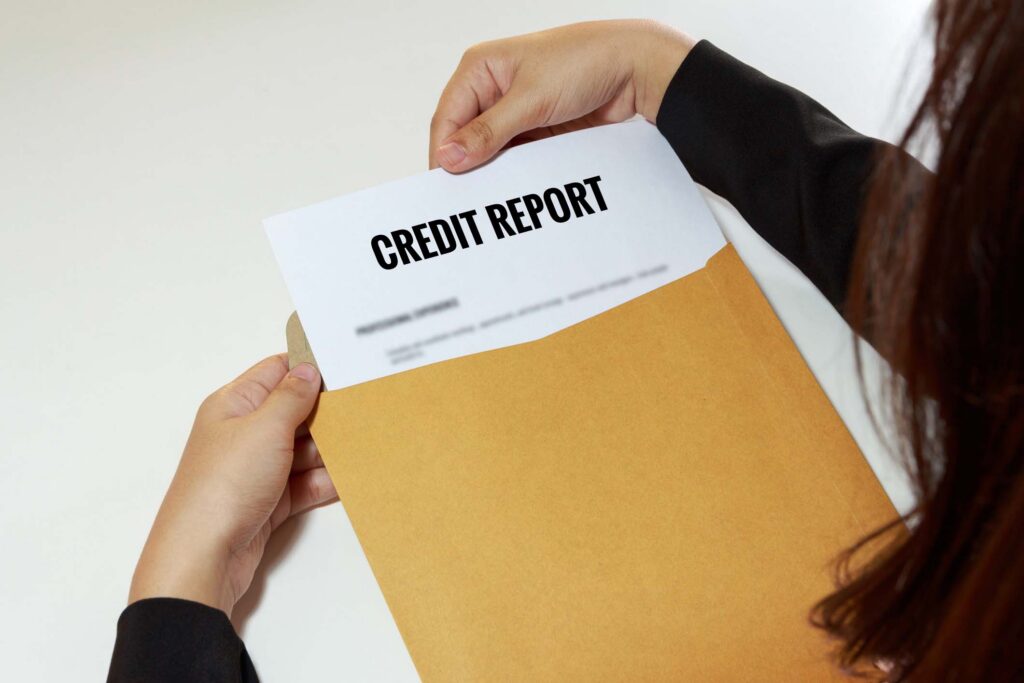
Six weeks later, a large manilla envelope arrived in the mail. Her credit score was 380. There were ten full pages of fraudulent credit cards and collections dating back to the time her parents’ identities were stolen. She assumed that whoever stole their identity also stole hers.
This was what sparked her initial interest. In the early 2000s, people didn’t know a lot about identity theft. Those that had heard of it didn’t really understand it. And people didn’t know how to protect themselves. So Axton was navigating the situation on her own. She wanted to help others understand it and feel less alone.
She channeled her frustration into her Master’s degree in consumer science and retailing, where she started to focus on identity theft. Then she got her PhD in human development and family studies, writing her dissertation on people who had their identities stolen as children but didn’t find out until they were adults.
Finding the Culprit
About six months after getting her PhD, Axton found the person responsible for stealing her identity, and it was largely by accident. Her mother had recently passed away from cancer. Not long after she passed, her dad called her. He was furious about Axton’s credit card being over the limit in 2001. Axton was confused. She hadn’t had a credit card in 2001, and also it was 2013. But her dad accused her of lying, saying he had the statement in his hand.
When he told her what company it was with, she realized it was one of the fraudulent cards taken out in her name as part of the identity theft. She asked him where he found it. It had been in one of her mom’s file boxes with Axton’s birth certificate.
Axton knew where her birth certificate was. It was in her apartment with her, a state away from her parents. She knew a lot about identity theft since she just did her dissertation on it. The dots started connecting, and she started to think that her mother had done it. She asked her dad to set aside any financial paperwork he found for her to look at it when she came home over spring break.

By the time she arrived two weeks later, there was a mountain of paperwork for her to look at. It had documentation of credit card accounts her mother had taken out in Axton’s name, her dad’s name, and even her grandfather’s name. There were denial letters for trying to establish bank accounts in other states under her dad’s name. There was evidence of tax evasion.
Axton’s mom had stuck to the lie of the identity theft her whole life. But she was the one responsible.
Unraveling the Paper Trail
As Axton sorted through her mother’s papers, the story unfolded. She had started by stealing Axton’s dad’s identity. When she had used that for all she could, she moved on to Axton’s. But when Axton moved away to college, she couldn’t control who Axton was talking to or what she was doing, so she stopped using her identity. It wasn’t like she could do much with a credit score of 380, anyway. When she stopped using Axton’s identity, she moved on to her grandfather.
It was devastating. Axton and her dad were dealing with the grief of losing her. Then they had to wrestle with the fact that the identity theft issue they’d been dealing with for so long was identity theft committed by a family member. Lots of people have asked what it was like emotionally. At first, she and her dad were grieving normally. But that stopped once they realized what had happened. It felt like they couldn’t be grieving because this was a stranger. Axton wanted to find out who her mother was, what she did, and why she would do that to them.
It was challenging to put the puzzle together after the fact. Axton detailed the whole process in her book, The Less People Know About Us.
Recovering from Identity Theft by a Family Member
Axton was lucky that the financial and emotional aspects of recovery were separate. She started disputing the fraudulent accounts on her credit report in 2001. She filed a police report. They didn’t do more than give her the report, but in the early 2000s, that was a good response. She shared a copy of the police report with creditors. Sometimes disputes worked. Sometimes they didn’t, purely on the basis that the name and social security number matched, which was frustrating. She had to let some of the fraudulent things just age off her report.
Back when she was nineteen, she knew that not having credit was just as detrimental as bad credit. And she also realized that even if she got all the bad stuff off her report, there wasn’t a lot of good stuff on there. She only had a few student loans, and they weren’t in repayment. If she got everything removed without building good credit, her score would be zero.
So she got a couple of credit cards. They had low limits and a 30% APR, which was outrageous back then. She used them sparingly and paid them off right away. Her goal was to show that she could manage credit responsibly. Her first car loan had a pretty high rate. After paying the loan on time for six months, she called the lender and asked to refinance for a lower rate. They agreed and cut her rate in half.
This two-pronged approach took a number of years. She was able to build good credit while getting some of the negative entries off. But the identity theft by a family member started in 1993, and Axton’s credit report wasn’t fully clear of fraudulent entries until 2009. So it was a long process.
Emotional Recovery from Identity Theft by a Family Member
One of the ways Axton’s mom was so successful in keeping her identity theft secret for twenty years was isolating them from friends and family members. She would tell Axton and her dad that the culprit must know then really well, so it had to be a friend or family member. There was enough truth in that to seem plausible. She would also suggest people it could be, like that aunt or that friend. She would ask how such-and-such friend could afford a new truck when they didn’t make that much money. It all seemed just plausible enough. Gradually, they became isolated from others.
Axton was an only child. So it was just the three of them – and at times Axton’s grandfather, who lived with them for some years – against the world. When Axton realized her mom had committed the identity theft, she also realized that she had created a fake reality where any loved one could have done this crime. So she set out to find out for herself.
Some of her extended family she hadn’t seen in over twenty years. Some she hadn’t met at all. She started showing up on doorsteps and making calls, asking hard questions, and explaining what happened. She asked these relatives and friends to tell her the truth. No Midwestern politeness, no holding back – Axton was over thirty now and wanted to hear it all. Through the process, she learned a lot about her mother, her mother’s parents, and her dad’s side of the family. She had to investigate for herself what was real and build or rebuild the relationships her mother took away twenty years ago.
The Motivation Behind Identity Theft by a Family Member
One of Axton’s big questions was why. She wanted to know what would have driven her mother to commit identity theft against her family members. She pored through every piece of paper she could find, looked through her computer and read all her emails, trying to find answers. There wasn’t any evidence of drug use, addiction, or gambling. Axton looked.
In the end, she thinks it was psychological. Her mom wanted to appear wealthy because wealth equals power. Axton never met her mother’s mother, but all the secondhand information she got said that she was like that, too. Her grandmother would shop almost compulsively, buying multiples and keeping all of them. It wasn’t quite hoarding, but it was close. When she died, there were clothes in her closet with the tags still on and multiple copies of the same board game in the closet. She spent so much that Axton’s grandfather considered bankruptcy in the 1970s. Axton thinks either her mother inherited that compulsion or watched her mother’s behavior and assumed that was just what you do.
Axton’s grandfather owned a gambling parlor in Ohio. He was apparently quite the character. There may have been financial issues, addiction, and issues with responsibility there. It was a family pattern to do strange, maladaptive, and toxic things around money. Axton thinks it was just normalized. Her mother ay have continued it because she thought it was normal, getting the money fraudulently but doing what she saw her parents do.
Axton’s mother bought a lot of things for other people. The family never saw the things she was buying at home. She would buy lunches for people, or buy rounds of drinks. It may have been a psychological need to try and be popular and likeable by buying things for people.
Check If You’re a Victim of Identity Theft
Through the experience of dealing with identity theft by a family member, Axton learned that the easiest way to find out if someone’s stolen your identity is to get copies of your credit reports. In the US, there are three agencies: Experian, Equifax, and TransUnion. You can go to annualcreditreport.com and get a free copy of each of those credit reports every week. And getting your report doesn’t affect your score. It’s also important to check all three, because creditors aren’t required to report to all of them. You could have a fraudulent account that shows up on Experian but not TransUnion, for example.
One of the easiest ways to detect if you have been a victim of identity theft is get copies of your credit reports.
Axton Betz-Hamilton
Check all three, and look for any account information that’s not yours. Definitely look for negative things like past due accounts and collections. But also look for positive things that aren’t yours, too. Depending on when the theft happened, you may see accounts that aren’t yet overdrawn, overdue, or in collections but still aren’t yours.
Also check for any addresses, phone numbers, or variations of your name that you don’t recognize. Dispute those too. Erroneous information on your credit report doesn’t necessarily equal identity theft. Mistakes happen, especially when people have similar names or social security numbers. That’s why it’s so important to check everything and dispute things you don’t recognize. Disputing will help you determine if it’s just an error or if it’s identity theft.
If there’s erroneous information on your credit report, it doesn’t necessarily mean you’ve been a victim of identity theft, because mistakes happen.
Axton Betz-Hamilton
Prevent Identity Theft by Freezing Your Credit
To prevent identity theft, you can freeze your credit. It wasn’t always easy in the past, but now it’s very easy and you can do it online. Anyone can do it – you don’t have to be a victim to freeze your credit. Just make sure you do it with all three agencies.
To prevent identity theft, freeze your credit.
Axton Betz-Hamilton
A credit freeze means that no one can open new accounts in your name. That includes you. If you want a new car and are getting a new car loan, you will get denied until you lift the freeze. It’s free to temporarily lift the freeze, too.
You can freeze your kids’ credit, too, and that is also free. It’s a bit more involved than freezing your own credit, because you have to prove your relationship to the child. You will probably have to mail some identity documents to the credit bureau, and each one has a slightly different process. But it is an important thing to do, because kids don’t often use credit. If they get their identity stolen when they’re ten, they might not find out until they go to college, and suddenly they have a decade’s worth of mess to clean up. Freezing your kids’ credit gives them the gift of not being a victim of identity theft by a family member or anyone else.
Prevent Identity Theft by Freezing Your Identity
You can minimize your risk of having your identity stolen for employment by freezing it with E-Verify. E-Verify is a government service where most employers verify employees’ identities. If you freeze your identity with E-Verify, in theory, no one who applies for employment in your name will pass an E-Verify check. The challenge is that not all employers use it. Some smaller companies may not. So it’s not entirely foolproof. But most employers use it.
Axton has frozen her identity with E-Verify. So if she were ever to leave her job at South Dakota State University and get a new job, she’d need to unfreeze it temporarily, just like a credit freeze.
Spot Identity Theft by Monitoring Accounts
Freezing your credit will prevent anyone from opening new accounts in your name. But it won’t stop people from taking over existing accounts or committing fraud on accounts you already have. So it’s important to watch those, too.
Monitoring existing accounts on a regular basis is a great way to detect issues early. Axton checks all of her accounts daily. That may be overkill for most people, but it’s a good idea to look semi-frequently. That way you can spot anything weird before it becomes a massive problem.
Steps to Recover from Identity Theft
In the 1990s and early 2000s, when Axton and her dad were trying to recover from identity theft by a family member, it was difficult and painful to recover. Now, it’s gotten easier. The IRS has created a system where you can get a PIN to file your taxes. Axton does this now. She didn’t start until a few years ago, when someone broke in and stole her laptop and a few other items. Since they could potentially get her personal information, she wanted to take extra steps to protect her identity.
You can go to the IRS website and request an identity theft PIN for free. That PIN is good for one year, and you’ll have to log in and get a new one every year. You have to provide this PIN when you do your taxes, or give it to your tax preparer. They won’t go through without the PIN. This keeps anyone else from using your identity to file federal taxes. It doesn’t apply to state taxes.
Some states are better than others when it comes to identity theft protections. Make sure you check your options with your specific state. Axton has nothing against Indiana, but when moving from Indiana to Illinois, she found Illinois has much better protections. Every state is a little different. Check your state’s attorney general website for resources.
Emotional Recovery from Identity Theft by a Family Member
Axton’s research on identity theft by a family member mostly focused on interviewing victims. She asked them how the identity theft impacted their relationship with their family. Many of them said that a great thing for their healing was limiting contact with the person who committed the crime. Setting that boundary let them focus on themselves, move forward, and rebuild their credit and financial security.
Often part of the process involves a family split. Once the family knows about the theft, some members will believe the victim and some will believe the offender. Factions tend to form. As a victim, you’ll find out who is supportive and who isn’t.
Based on Axton’s research, the top resource victims of identity theft by a family member go to is a mental health provider. These professionals help them work through emotional and relationship issues, process what the experience means for them, and figure out what it means for their role in the family system.
Resources for Recovery
The Identity Theft Resource Center (ITRC) is a nonprofit that’s been around for over twenty-five years. For lack of a better way to say it, they “get it” when it comes to identity theft. They know how comprehensive it can be, and that it doesn’t just impact your finances but your whole life. They understand the emotional, physical, legal, and relationship consequences along with the financial.
The ITRC has a lot of resources on their website. You can also call them or chat with them online. They’re a wonderful resource for all aspects. One of the many challenges of recovery is that every place you have to tell your story is trained in managing one small aspect of it, so you’re stuck trying to integrate all of it. The ITRC understand all of it, and they can be a one-stop shop to help you along the way. If there’s something they can’t help with, they can at least point you in the right direction.
Axton Betz-Hamilton is still interviewing victims of identity theft. If you have been a victim, reach out to [email protected] and she can see if you’re a good fit for one of her studies. You can also connect with her on LinkedIn and on her professional Facebook page.