
How to Protect Sensitive Healthcare Data

From your medical history to your social security number and insurance details, your medical records contain sensitive and confidential data. Unfortunately, that data makes healthcare organizations prime targets for cybercriminals.
Bad actors look for vulnerabilities in healthcare cybersecurity to exploit, and they may infiltrate a healthcare system to cause data breaches, steal identities, and launch ransomware attacks.
The good news is that robust cybersecurity measures can keep your medical records safe. Both healthcare organizations and patients can take steps to protect healthcare data.
By understanding the most common cyber threats to healthcare organizations, utilizing privacy tools, and following HIPAA compliance guidelines and cybersecurity best practices, healthcare data can remain private and secure.
Why healthcare cybersecurity matters more than ever
Healthcare organizations are often the target of major cyberattacks. Even as robust healthcare cybersecurity measures are put in place, every year seems to result in data breaches, phishing scams, ransomware, and other attacks.
According to the HIPAA Journal, 2023 broke records with 725 reported healthcare data breaches and over 133 million patient medical records exposed. In 2024, a shocking 92% of healthcare organizations experienced some type of cyberattack. And since 2009, digital healthcare cybersecurity breaches have impacted over 319 million people — that’s almost 97% of the U.S. population.
Healthcare cybersecurity impacts the digital privacy of all patients. Cyberattacks on clinics, healthcare systems, hospitals, and insurance providers have surged in recent years, as stolen medical records continue to sell for high prices on the dark web and are in greater demand than other types of personal records.
Permanent and sensitive patient information, like diagnoses, prescriptions, treatments, and Social Security numbers, cannot be erased or replaced, even if stolen. Protecting healthcare data is essential for patient safety and trust, and organizations without a comprehensive cybersecurity plan might experience costly legal consequences.
Detection of insider threats, electronic tracking, digital records, and the use of data encryption for sensitive files have helped to reduce data breaches and cyberattacks, but vulnerabilities still exist. Extensive HIPAA and cybersecurity awareness training are vital to protect both patient and provider privacy.
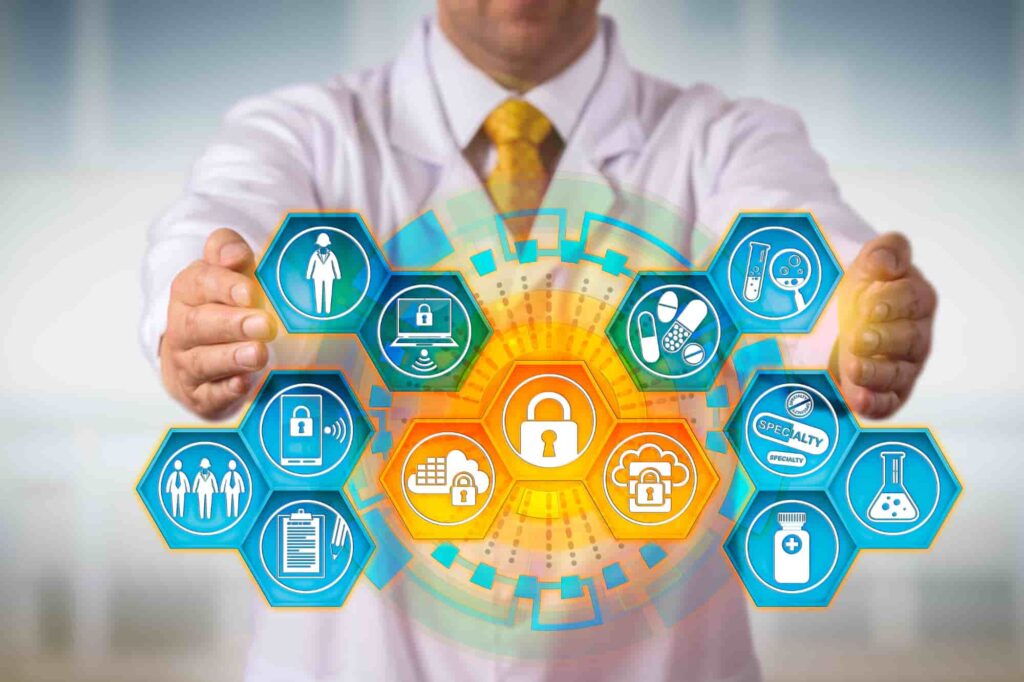
Vulnerabilities in healthcare cybersecurity
The vulnerabilities in healthcare cybersecurity that lead to attacks include:
Data Sensitivity:
By nature, data collection in healthcare is extremely sensitive. Medical records and extensive personal information make this data an extremely lucrative reward for cybercriminals.
Inconsistent Security Measures:
Devices in healthcare are often connected to a vast network, outside of a singular office. Thus, the level of cybersecurity protections, such as multi-factor authentication (MFA), regularly updated software and firmware, and robust antivirus software, may vary based on the provider, which leaves the network exposed to cyber threats.
Lack of HIPAA Compliance:
Healthcare cybersecurity measures must remain in compliance with HIPAA regulations. This means that data should be encrypted, risk assessments need to be thorough and addressed, healthcare workers should undergo cybersecurity awareness training, and privacy access controls should be in place.
When healthcare organizations fail to comply with HIPAA security standards, the risk of cyberattack increases.
Outdated Legacy Systems:
Outdated operating systems can leave healthcare data vulnerable to a cyberattack. Due to a lack of allocated funds, some providers may be working with less-than-current digital systems.
Third-Party Vendors:
Healthcare organizations often rely on third-party vendors, such as insurance providers and IT services, for contracted work. Third-party vendors may have weaker cybersecurity protocols in place that expose vulnerabilities in healthcare operating systems.
Common cyber threats to sensitive healthcare data
In order to protect your healthcare data and reduce vulnerabilities in cybersecurity, it’s important to understand the common threats that target healthcare organizations.
Cybercriminals target healthcare systems through a variety of methods, from phishing emails and ransomware to insider threats. Healthcare data breaches can expose everything from insurance details to lab results and diagnoses, leading to fraud, blackmail, and even medical identity theft. Understanding these threats is the first step toward protecting healthcare data from falling into the wrong hands.
Some of the most common cyber threats to healthcare data include:
Data Breaches:
Digital health records contain vast amounts of data, and with millions of personal records stored in the same system, healthcare organizations are ripe targets for data breaches.
DDoS (Distributed Denial-of-Service) Attacks:
These cyberattacks flood healthcare networks and disrupt patient care by overwhelming systems. In 2024 alone, 14 million patients were negatively impacted by healthcare data breaches.
Insider Threats:
Insider threats aren’t always malevolent. Human error, technical issues, and a lack of security awareness training are often exploited by cybercriminals.
Phishing Attacks:
Phishing attacks often come through healthcare employees’ emails or direct messaging. In phishing scams, hackers might use social engineering tactics to manipulate a healthcare professional into downloading malware or revealing confidential data.
Ransomware:
Ransomware is a type of malware that encrypts and “locks” the data of a system or device. The bad actors behind these attacks often demand a financial ransom to release a decryption key, and bring a screeching halt to operations.
Ransomware frequently targets healthcare organizations and causes significant consequences. For example, the 2017 Wannacry ransomware attack impacted 1,200 medical diagnostic devices, impacted 81 National Health System (NHS) hospitals in the UK, and forced multiple hospital emergency rooms to close until the issue was resolved.
How HIPAA compliance helps to protect your medical records
Enacted in 1996, the Health Insurance Portability and Accountability Act (HIPAA) sets strict federal regulations for patient privacy and medical records protection. HIPAA compliance is vital for any healthcare provider and can reduce the risk of healthcare data breaches.
Healthcare cybersecurity strategies must be aligned with HIPAA compliance and should include comprehensive employee training, regularly conducted risk assessments, mitigation strategies to detect and shut down a cyber threat, and encrypted digital medical records.
Cybersecurity best practices for healthcare organizations
Hospitals, clinics, and other healthcare providers can implement cybersecurity measures that will reduce the risk of cyber threats and keep patient information safe.
By establishing a strong workplace security culture through employee training and comprehensive healthcare cybersecurity policies and procedures, healthcare organizations can decrease vulnerabilities and make it tougher for hackers to exploit system weaknesses.
Cybersecurity best practices for healthcare organizations include:
- Digital data encryption of all medical records
- Implementation of multi-factor authentication
- Limitation of authorized access
- Regular network security audits
- Regular firmware and software updates
- Requiring mobile device protection for all workers
- Strategic threat response plans
Privacy tools that help keep patient information secure
From secure patient portals to advanced threat detection systems, modern healthcare cybersecurity relies on technology. Encryption software (like BitLocker), intrusion detection software (like Snort), and endpoint protection solutions (such as CrowdStrike) play key roles in safeguarding sensitive healthcare data. Choosing the right security tools can drastically reduce the likelihood of a breach.
How you can safeguard your healthcare data
Although providers are responsible for healthcare cybersecurity, patients can take proactive steps to safeguard their information. Ensure you’re doing the following to increase your privacy and protection:
- Use strong, unique passwords for patient portals
- Avoid accessing health accounts on public Wi-Fi
- Regularly check your medical records for errors or signs of fraud
As cyberattacks become increasingly sophisticated, proactive healthcare cybersecurity is critical for all of us. Understanding the most common cyber threats, maintaining HIPAA compliance, and implementing strong cybersecurity policies and procedures can mitigate the risk of healthcare data breaches and other attacks.
Protecting sensitive healthcare data is a way to preserve public trust and protect patient privacy.
For more on healthcare cybersecurity and tips to protect your privacy, visit the What Is My IP Address blog or listen to the Easy Prey Podcast available to stream on your favorite podcast platforms.