
Dating Fraud is Organized, Sophisticated, and Dangerous
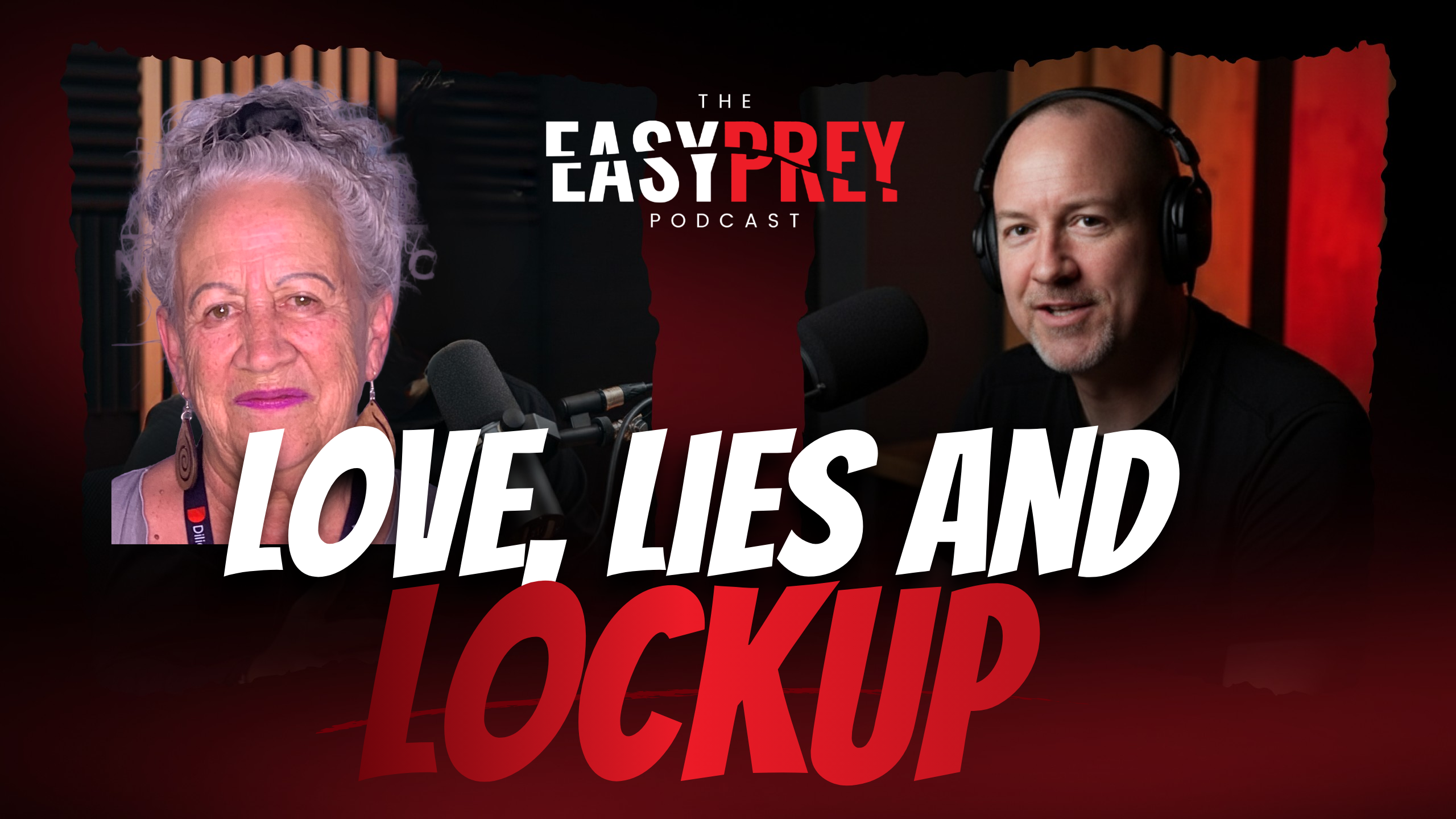
We often think about romance scams and dating fraud as being about stealing money from victims. But that’s not the only use these criminals have for their targets. Some of these fraudsters take it much, much farther. The consequences of their manipulation can endanger victim’s freedom and even their lives.
See Love, Lies, and Lockup with Sharon Armstrong for a complete transcript of the Easy Prey podcast episode.
Criminals manipulated Sharon Armstrong into an online romance that drew her into a web of lies that ended with her in prison across the world from her home. She returned home after two years incarcerated and had to come to terms with what happened to her and move forward with her life. Today, she is an author and international scam awareness advocate who works to educate people, support survivors, and challenge the shame that silences victims. Her book Organised Deception tells her story of living through this scam and its consequences.
Sharon’s Story of Dating Fraud
Sharon was born in New Zealand and spent most of her life living there. After two decades working in the public sector there, she felt it was time for a change. So in 2010, she moved to Brisbane, Australia, where some of her family already lived. It was difficult for her to find work in Australia, which was a new experience for her.
Towards the end of 2010, a well-meaning cousin signed her up for a dating site. She gave it a try, but after three weeks and a few lackluster conversations, she decided it really wasn’t for her. The process of deleting an account took a few days, and in the gap between requesting the deletion and her profile disappearing, she got a message from one more person. His name was Frank. He was handsome, his profile said he lived only 40 minutes away, and his initial message was interesting. Sharon shared it with her sister and daughter, and they all agreed he sounded worth talking to.
So Sharon kept talking to him. He quickly moved their conversation off the dating site. And for the next three weeks, things were intense. They were messaging all the time. He said that he loved her, even though they hadn’t met in person yet. Sharon now believes that there were multiple people controlling this persona, and in hindsight, she can see warning signs. But at the time, she wasn’t thinking about dating fraud. She was quickly wrapped up in this budding new relationship.
At the time, you just don’t realize, but … when you pull it all together, you see how organized [scammers] are at what they do.
Sharon Armstrong
The Drama Continues
Sharon and Frank were supposed to meet in person for the first time one Sunday afternoon. But he cancelled the meeting – he had to go to Sydney unexpectedly for a meeting about a work contract in London. Then he told her that he’d had to fly directly from Sydney to London. He was supposedly an engineer working in some factory, and they fraudsters even put machinery noises in the background of his phone calls.
In many ways, Sharon’s experience of dating fraud was quite typical. He’d come up with a good story for why they couldn’t meet in person, and not long after, he asked for money. Initially, Sharon said no. After all, she was unemployed. But eventually, she did send money. Not a lot, but enough for the fraudsters to know they could convince her to act.
Somehow he always had another issue and needed more money. They had first started talking at the end of November, and by the time January rolled around, Sharon was in deep. She noticed that some things were odd, but dismissed them. She trusted him, and everything was so convincing. He kept asking for money, escalating the seriousness of the need. Sharon never borrowed money from family, but she did move back to New Zealand to get a job and have more money to send to him.
In hindsight, the scheme was incredible. These criminals were unbelievably good at romancing her. In presentations, Sharon sometimes tells men they need to step up their game, because the scammers were better at romance then a lot of legitimate men. Even though it had been a very short time and she hadn’t met “Frank” in person, the manipulation tactics worked so well that Sharon never doubted the story.
Setting Up the Final Play
The romance kept picking up the pace as time went on. In March, “Frank” said he wanted Sharon to fly to London so they could live happily ever after. Sharon was thrilled. But her family was not. They had started becoming concerned around mid-January. But by then, Sharon was in so deep that she was in denial. None of their concerns were breaking through.
Family had always been the most important thing in Sharon’s life. But as they disapproved of her romance with “Frank,” that started to shift. She told her daughter she was leaving just hours before her flight left from New Zealand. The fact that her focus had shifted just illustrates how powerful and strategic these criminals are. Sharon can’t imagine the worry she inflicted on her family through this whole scenario – it was one of the hardest things to come to terms with.
My family have always been the most important things in my life. To actually have that focus shift for me shows the power of the scammers.
Sharon Armstrong
“Frank” wasn’t bringing Sharon to London for no reason, though. He wanted her help along the way. He said he had a new contract with a company in Spain. Sharon’s flight to London would have a layover in Argentina. He would have someone bring her some documents related to that contract, and she just had to take them to London with her. Sharon checked out the story, and the company in Spain was real. It seemed like a reasonable request, and so she agreed. She wasn’t thinking about risks, dangers, or dating fraud. She was just excited to finally meet this wonderful man she’d been talking to for months. If she could help him out along the way, so much the better.
The Turning Point
What Sharon thought was going to be a layover in Argentina turned out to be a week-long stay. She was far from her home, didn’t speak the language, and was staying in a not-great hotel. So she was already confused and upset when, instead of the documents she expected, she got an empty suitcase. Frank told her that they’d hidden the documents because it’s such a significant contract, so she just needed to switch suitcases. But Sharon pushed back. Finally, he told her it was okay if she looked.
That was the turning point for Sharon. Later, she learned about the sunk cost fallacy, and she thinks that’s what happened here. She had already put so much into this relationship that she didn’t want to have it disproved. Ultimately, she didn’t look. She wanted to trust Frank and wanted to believe she was going to be with him. So even though she had the opportunity to verify his story, she didn’t take it.
So did I [check his story]? No, I didn’t. Why not? Because I wanted to trust this man. I wanted to believe that I was going to be with this person.
Sharon Armstrong
The next day at the airport, she was sitting in the lounge waiting to board when they called her name. Still, she wasn’t concerned. They told her there was something in her bag. But she still wasn’t concerned. They put her in a separate room for almost two hours. Frank tried to call, but they wouldn’t let her answer her phone. She wasn’t scared, just annoyed. She’d missed her flight by this point, and she figured they’d put her on the next one once they found the documents. At that point, she was still invested in believing Frank’s story.
The Consequences of This Dating Fraud
Eventually, airport officials took Sharon to another room and went through her suitcase. It seemed to take forever, but there wasn’t anything there. Then they lifted up the lining, and Sharon saw three flat packages at the bottom, wrapped in masking tape. An official picked up one and sliced it open with a sharp knife. Sharon could see white powder inside.
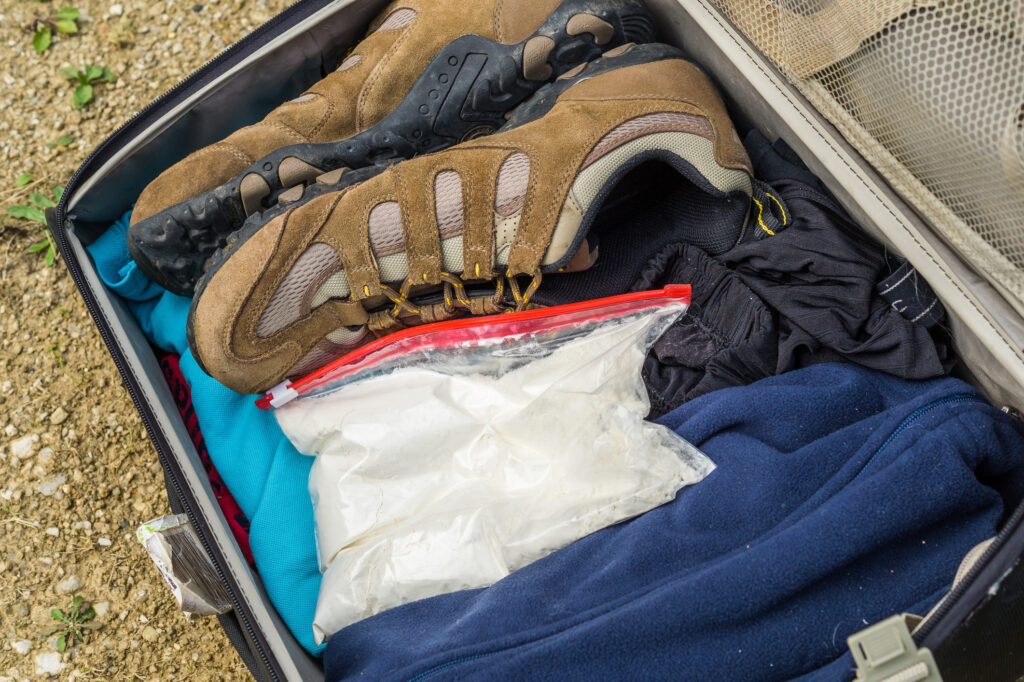
Sharon’s stomach had sunk when she saw the packages. But when she saw the powder, she collapsed. The only other time she had been so completely overwhelmed by emotion was when she found out her mom had died. After fifteen years, she’s had time to heal, so she can tell the story without getting emotional. But then, it was so overwhelming she couldn’t function. She remembers the airport officials asking if she was okay, and she remembers thinking, I’m never going to be okay again for the rest of my life.
How could she explain why she was in a foreign country with five kilos of cocaine in her suitcase? How could she live with that, go back to her country, tell her family? It was so overwhelming that for the next three days, her survival strategy was minute by minute. She couldn’t even face the reality of the dating fraud yet. All she could cope with was the immediate next thing.
Sharon spent two and a half years in prison in Argentia. She was initially charged, but her family insisted she argue that she was an innocent, unwitting drug mule. There were a handful of people also in prison that had been set up the same way, and she was the only one to make that argument. After multiple appeals, Sharon was eventually deported back to New Zealand without a conviction.
Getting Back to Normal and Telling Her Story
While in prison, Sharon kept a journal and read over 200 books. Every day, she woke up and told herself that she could choose to be happy or choose to be sad, and every day she chose to be happy. That didn’t mean she was happy every day, but she was determined not to come back bitter and twisted. She didn’t want to change, because if she changed, the criminals had won.
When she finally came home to New Zealand, it was a big adjustment. She didn’t have any money and hadn’t been around people in years. She had been ready to jump right back into work, but her daughter suggested she take a couple months to readjust. The woman who had been helping her family manage the media circus around Sharon’s circumstances also suggested she take eighteen months out of the limelight. Sharon took that advice, and it was the best advice she could have gotten. After that break, she was able to get a job and start living her life again.
Sharon had planned for a while to write a book telling her story. But life things happened, and she had bits and pieces written but nothing coherent. In 2017, she got extremely sick. She recovered, but it lit a fire under her. Over the next few months, she pulled together what she had and wrote her dating fraud story into a book. Her story isn’t typical. Spending over two years in prison gave her time to prioritize herself, which helped. So when she finally could tell the story, she could do it without becoming overwhelmed by emotions again.
Family Response to Dating Fraud
Sharon’s family was initially supportive. After all, both her daughter and sister thought Frank was interesting enough to keep talking to. But she thinks they first got concerned when “Frank” went from Australia to London and they didn’t actually meet. The intensity was probably concerning, too. Sharon was always on the computer messaging him or on the phone with him.
A production house in New Zealand bought the film rights to Organised Deception and produced a drama that tells the story well. It shows arguments with her family that didn’t happen but could have. There’s also a scene where the movie Sharon takes her eight-year-old grandson to the movies and leaves him alone in the theater to call Frank. That didn’t happen, but it could have. It illustrates how intense and involved the relationship was.
A lot of scammers try to distance victims from their families. Frank didn’t try anything extreme or obvious. Sharon likes to think she would have pushed back if he had. In the 1990s, she was a probation officer trained to work with sex offenders and pedophiles. She knows how they groom victims. What happens with dating fraud isn’t much different. The fraudsters distanced her by taking up her time and attention, but she likes to think she would have spotted anything more overt.
Sharon minimized her family’s concerns. Moving back to New Zealand helped. They probably assumed that since she started working again, she and Frank weren’t talking as much, and Sharon stopped talking about him. But she still sent him 7,000 messages in five months. That’s over 250 messages a week. She had no idea it was that intense. When you’re a dating fraud target, it’s hard to see how outside of the norm it is. That’s part of why it’s so effective.
The Surprising Upside of Prison
For the first couple months in prison, Sharon was harder on herself than the public. She was vilified in the papers, to the point where her family wouldn’t even tell her the headlines. But she was doing all that to herself, too. After a couple of months, she started to become physically sick from the distress.
At that point, she confronted herself. Her family was already worried about her. She didn’t want them to be worried about her health, too. She could wallow in misery or accept what happened. So she decided to look at the truth of the dating fraud, examine how and why it happened, and make the choice to not become bitter and rise above it. Forgiving herself was the hardest part. She felt foolish and ashamed and had hurt her family. But healing had to start with that forgiveness.
The one benefit of being in prison for this was that she didn’t have to carry on a normal life. While locked up, she had a lot of time to think. Sharon’s rose-colored glasses shattered when she saw what was in that suitcase, and that was unbelievably hard to deal with. Lots of people have that happen and still have to go about their daily lives. Sharon didn’t. An Argentinian prison is not an enjoyable place to be. But she had lots of time to think, to deal with the grief and the anger of realizing Frank wasn’t real and he’d manipulated her.
When Sharon talks to victims, she tells them she’d love to be able to deal with those emotions for them, but she can’t. Victims have to process it all. It hurts and it’s hard, but they can get through it. Some take days, others take months or longer. But it is possible.
Finding Gratitude in Prison
One of the things that kickstarted Sharon’s healing in the early stages of dealing with the aftermath of this dating fraud was gratitude. In reflecting on the whole chain of events, she found a surprising number of things to be grateful for.
Sharon continues to be grateful that she didn’t actually get to London. She believes that if she had, they would have taken her ID away, killed her, and dumped her body somewhere. Her family probably would never have found out what happened to her. She is also grateful that the criminals didn’t send her through a country with a death penalty. If they had, she wouldn’t be here today. And she’s grateful her prison experience wasn’t worse. Obviously Argentinian prisons aren’t paradise – it is a third-world country, after all. But it also could have been much, much worse.
Sharon firmly believes that she wouldn’t be telling her story today if she hadn’t been arrested. As awful as it was to go through, the other outcomes of this dating fraud were almost certainly worse. Part of why she has the strength to share her experience is because she’s so grateful for these factors that made it possible for her to do what she does today.
Blaming Victims of Dating Fraud
What upsets Sharon most in responses to dating fraud victims is that people don’t understand how sophisticated the criminals are. We tend to blame the victim. It’s not always intentional. It’s integrated in the language of “falling for” a scam. Now, Sharon pushes back. She didn’t “fall for” a scam. She was targeted by sophisticated criminals who deceived, manipulated, and exploited her.
I didn’t fall for a romance scam. I was targeted … [by] a sophisticated group of criminals who set out to deceive me.
Sharon Armstrong
We need to shift the spotlight off the scam victims and put it on the cartels, scam compounds, and organized criminals behind them. Sharon called her book Organised Deception because that sums up what happens. She didn’t volunteer to be scammed – they intentionally set out to deceive.
We need to shift the spotlight from the [scam] victim and place it brightly and firmly on the criminals.
Sharon Armstrong
Criminals love scams because the investment is small, the risk is low, and they can make a lot of money. The problem is huge and serious. But victim-blaming is easier than dealing with the issue. On a societal level, it’s easier to assume victims are dumb a than to try to address the problem. There still isn’t a lot of support for victims, either. People need to be able to reach out for help without being judged or vilified. We still have a long way to go, but it’s a critical need.
People need to be able to reach out and get support without being judged, without the vilifying that can often go with it.
Sharon Armstrong
Find Sharon Armstrong on her website, sharonarmstrong.org, on her Facebook page standup2scams, or via email at [email protected]. Her book Organised Deception is available on Amazon.